The focus for World Health Day 2026 is “Together for health, Stand with science.” This theme underscores a “One Health” approach aimed at safeguarding the welfare of humans, animals, plants, and the planet. This viewpoint stresses the growing environmental issues that pose serious risks to global, ecological, and public health systems.
A significant issue is a particular category of chemicals that are troubling due to their capacity to build up in living beings and amplify through the food web.[1] As we are aware, plastics and microplastics are creating substantial problems, and justifiably so. Certain plastics require centuries to decompose. But there are some chemicals that never degrade. They keep accumulating in human and animal bodies, as well as in the plant kingdom. They just pile up, whether in landfills, the environment, or even our own bodies, FOREVER!
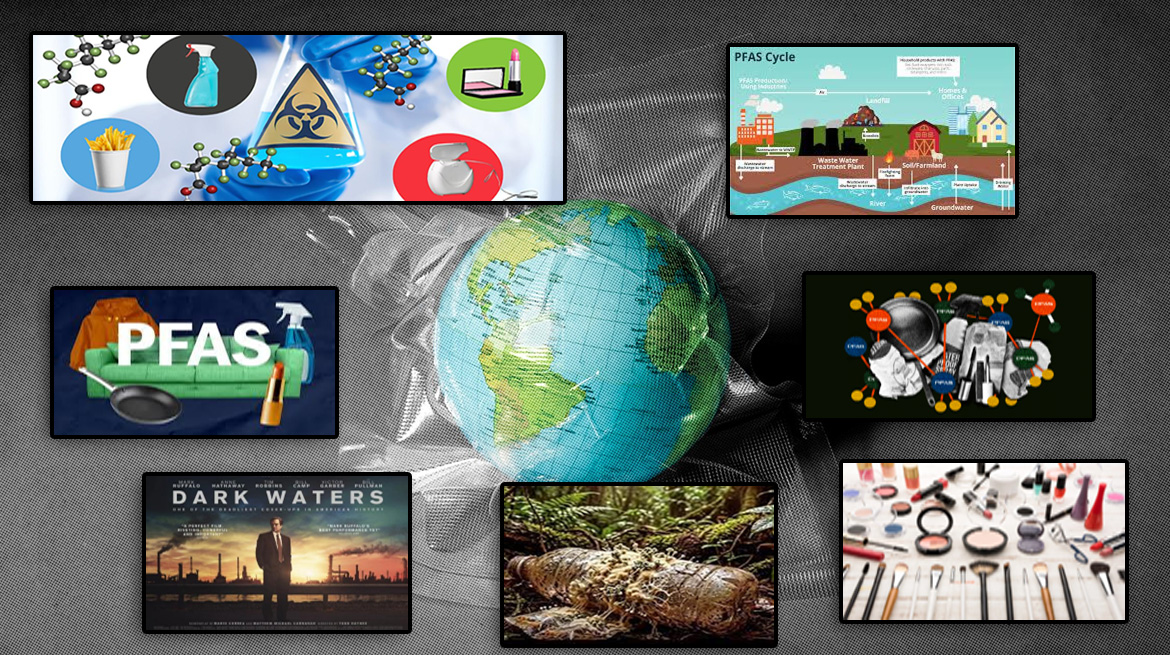
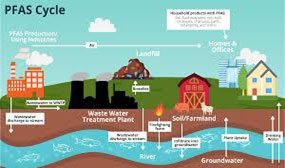 Forever chemicals, also called PFAS, or Polyfluoroalkyl substances, are synthetic chemicals utilised in a multitude of products. They are referred to as “Forever Chemicals” because they never break down and are notorious for their persistence. This characteristic stems from their robust carbon-fluorine bonds, which rank among the strongest chemical bonds found in nature. These bonds impart distinctive qualities that render them resistant to water, oil, and dirt, making them stain-proof. Sounds impressive, isn’t it?
With approximately 10,000 chemicals classified under the PFAS umbrella, they are prevalent in contemporary products. PFAS have been in use since 1938 and play a vital role in various industries. They are harmful even at extremely low concentrations, detectable in parts per trillion, and pose serious health hazards. Alarmingly, PFAS were detected in the breast milk, umbilical cord blood, or bloodstream of 99 percent of individuals surveyed in a study by the Centre for Disease Control and Prevention’s National Health and Nutrition Examination Survey. [2]
While several countries have regulations governing these chemicals, they are still in use in various locations, despite causing environmental pollution.
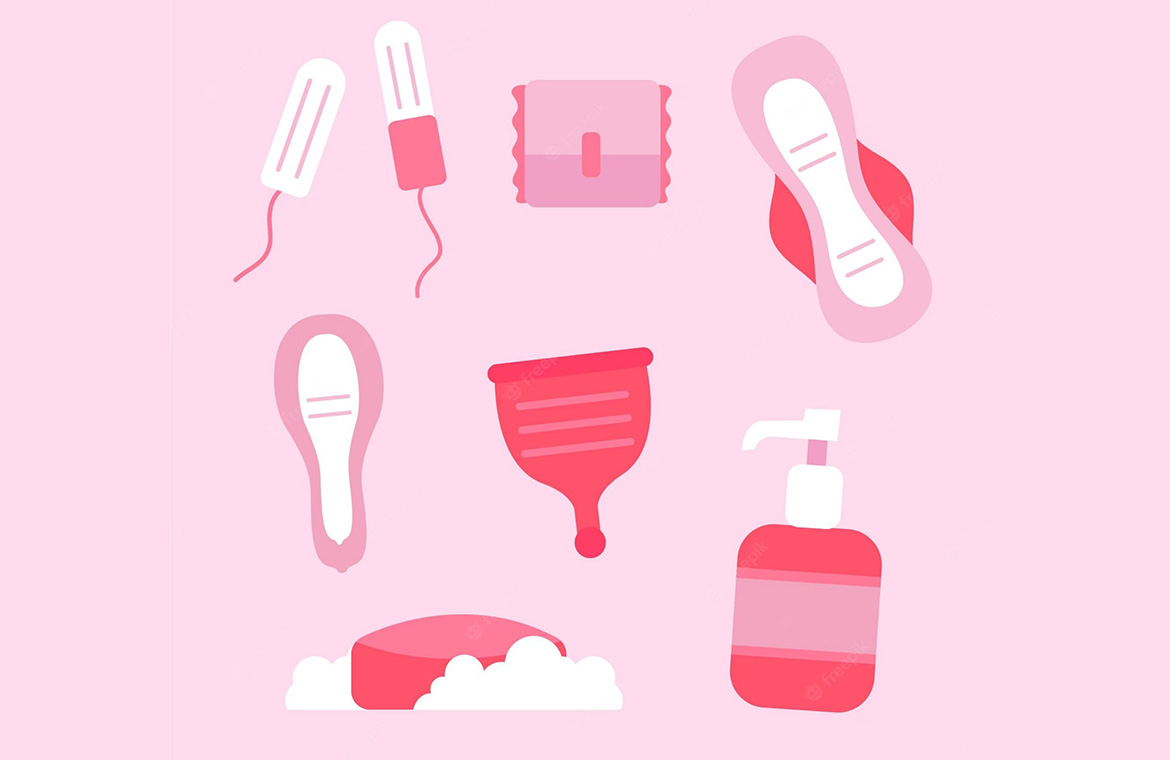
 Common items that contain PFAS include teflon-coated non-stick cookware, food packaging products, dental floss, feminine hygiene products, paper cups, tea bags, take-away containers, and more. Other products encompass firefighting foams, water-repellent and stain-resistant clothing, paint, varnishes, and specific cosmetics.
HEALTH HAZARDS OF PFAS
- Workers of factories making PFAS or products thereof, as well as those living in close vicinity, have a higher risk of cancers
- Hormonal and enzyme dysfunction
- Disturbance in cholesterol metabolism, thereby increasing the risk of heart diseases
- Suppression of immunity
- Decreased fertility in women
- Increased risk of pregnancy-induced hypertension, preeclampsia and low birth weight babies
Unfortunately, PFAS contamination is not being addressed effectively in India due to critical challenges such as regulatory gaps, inadequate monitoring, and technological barriers.
 “Dark Waters” (2019) tells the true story of lawyer Rob Bilott’s 20-year fight against DuPont, exposing their role in PFAS contamination of water sources. The film reveals how DuPont knowingly harmed people and animals, including their own workers, by denying the dangers of these toxic chemicals. Bilott’s relentless pursuit led to DuPont paying compensation and ultimately stopping PFAS production.[3]
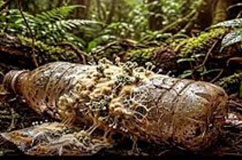 DALDINIA CONCENTRICA, nicknamed “carbon antlers”
This fungus is breaking down the chemicals polypropylene and polyethylene in regular soil conditions, no high temperature or sorting needed. In controlled designed systems, the fungus breaks down the carbon-fluorine bonds in PFAS, converting them into less toxic products. During testing, it degraded these chemicals by over 90% in 5 months, leaving behind biodegradable, non-toxic stuff. It basically uses enzymes to break it down into simpler molecules, which it then absorbs as food. Researchers think it could be a game-changer for landfills and pollution, and are exploring ways to scale it up.[4]
 TIPS ON HOW TO PROTECT YOURSELF
- The first step to cutting back on PFAS is awareness. Health effects of PFAS usually show up only after they build up in our bodies. So, a reduction in the consumption of PFAS is most important.
- Avoid non-stick cookware. Instead, switch over to PFAS-free cookware options like cast iron, carbon steel, etc. Avoid “PFOA-free Teflon” – it still contains other PFAS. Look for “PFAS-free” or “no fluoropolymers”.
- While choosing cosmetics, look for the chemicals used in them. Common product types with the highest PFAS risk include waterproof mascara and eyeliner, long-wear liquid lipstick, foundation with “wear” claims, sunscreen sprays, especially “waterproof” or “long-lasting” products, sweat-proof or transfer-proof makeup. These aren’t automatically PFAS, but they’re high-risk categories. PFAS in cosmetics can be absorbed through skin, tear ducts, and lips, so avoiding them matters.
 PFAS won’t be labelled as “PFAS”. Look for these red-flag terms like “perfluoro” or “polyfluoro” prefixes
- Water contamination levels of PFAS can be reduced by using certain home water filters. Reverse osmosis and granular activated carbon are two types of filters that can effectively remove PFAS and other contaminants from drinking water. The effectiveness of these may vary. It is important to periodically replace filters and to follow manufacturers’ recommendations.
- Please note that boiling your water does not get rid of PFAS and can actually make its concentration higher.
- Fast food carries not only the risk of PFAS but also causes a nutritional imbalance.
- Use of foam-type firefighters’ extinguishers should be avoided.
PFAS are all around us. More exposure over time increases the risk of serious health problems as they accumulate in our bodies. Can’t avoid them completely, but the less we use, the better it is!
REFERENCES
- Rajneesh K Gautam et al. PFAS contamination in key indian states: A critical review of environmental impacts, regulatory challenges and predictive exposure. Journal of Hazardous Materials Advances, Vol 18, May 2025, 100748.
- Julianne C Botelho et al. Per- and polyfluoroalkyl substances (PFAS) exposure in the U.S. population: NHANES 1999–March 2020 Environmental sciences. Vol 270, Apr 2025, 120916.
- https://www.penguinrandomhouse.com/books/623109/dark-waters-by-katherine-arden
- Jinghao Li et al. Sustainable environmental remediation via biomimetic multifunctional lignocellulosic nano framework. Nature Communications (2022), 13:4368