
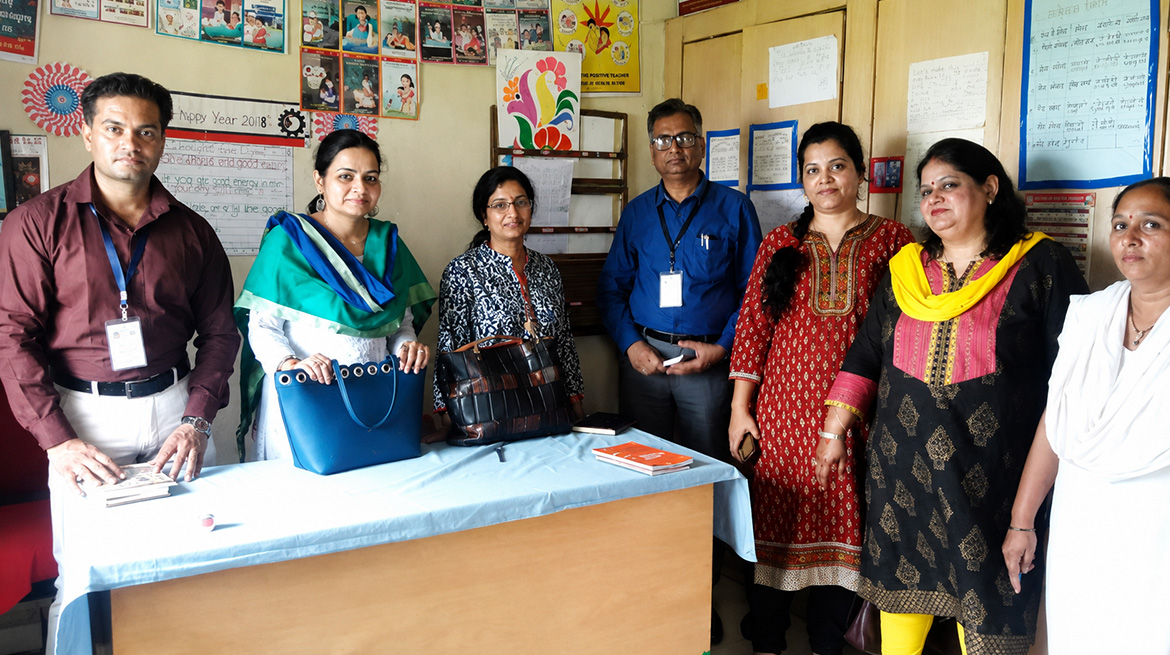
It was October 2017 when I attended a National-Level Maternal Death Surveillance Response (MDSR) meeting at Sevagram, Wardha in Maharashtra. Six of us had been selected from Gujarat as subject experts.
The first day of the meeting was rich with data, research findings, and statistical analyses. The next day, we were taken for field visits to various healthcare facilities in Maharashtra to understand their systems and identify practices Gujarat could adopt.
One of the most important tools in reducing maternal deaths is a Verbal Autopsy—a structured interaction with the family of a deceased mother to understand the circumstances surrounding her death, identify gaps, and prevent similar tragedies. My team, comprising doctors from across India, was assigned a home visit.
Around ten in the morning, we reached the house where a young mother had died just a few days earlier. From a distance, it belonged to a modest middle-class family: two small rooms, a kitchen, and a veranda. It looked as though it hadn’t been cleaned for days—perhaps because the woman who cared for it no longer existed in this world.
The husband was waiting for us. Just a week ago, this house had been full of life. Today, he sat there alone.
Arrangements had been made for us to sit on the floor. Dr. Abhishek, a team member fluent in Marathi, led the conversation.
At first, the husband spoke normally about ordinary days. How she woke up, prepared breakfast, and got their five-year-old son ready for school. As the conversation moved deeper into memories, a softness entered his voice. Then came the discussion about the day she died.
He remembered everything. What she cooked, what they laughed about, when she kissed their son on the cheek for the last time, and the dreams they held for their unborn child. Every detail remained alive inside him. As he spoke, his voice began trembling.
There was still about a month left for delivery. At around one in the morning, his wife suddenly developed severe abdominal pain and heavy bleeding. Panicked, they left their sleeping child with a neighbor and rushed to the nearest health center. Due to a lack of facilities, they were referred to the medical college hospital in Wardha.
Precious hours were lost. Throughout the ride, he held her hand tightly, reassuring her. They reached the hospital around 2:30 a.m., but before treatment could even begin, she died. Even in her final moments, they were holding hands.
Tears streamed endlessly down his face. The conversation happened in Marathi, yet every person sitting there understood perfectly. To understand grief, language is never necessary. Finally, with tear-filled eyes, he whispered, “She was a very good woman…”
Suddenly, he looked at the clock. It was almost noon.
“Sir… please excuse me for two minutes,” he said, standing up. “My five-year-old son, Sonu, must be returning from school. His mother used to receive him from the bus every day. For the past three days, I’ve been going myself. If he doesn’t see me, he’ll remember his mother and cry. I’ll just come back.”
He quickly wiped his tears, splashed water on his face, and walked out. Minutes later, he returned, carrying his son lovingly in his arms, smiling and talking cheerfully. We sat silently, realizing how excruciating it must be to carry so much pain inside, yet smile outside just so a child does not break down.
As he sat down again, he spoke one final sentence that pierced directly through our hearts:
“Sir… yesterday he asked me, ‘Papa, can’t Mama come back just for one day?’ Tell me, Sir… what answer should I give him?”
While returning on the bus, I kept staring out the window. A thought stayed with me throughout the journey. If that little child could write a letter to his mother, perhaps it would sound something like this:
My Dearest Mother,
I hope you are happy wherever you are. But Papa and I are not happy here without you. Every morning, I forget for a moment that you are gone. I wait to hear your voice saying, “Wake up quickly, or you’ll be late.” But your voice never comes.
When the school bus leaves, my hand automatically stretches toward the balcony to wave goodbye. When I don’t see you, I wave toward the sky instead. Maybe you are waving back.
When I return home, I shout “Mama!” loudly, but my voice only hits the empty kitchen walls. Earlier, you used to feed me, and I would make silly demands. Now, I quietly eat whatever Papa cooks. You always complained that I scattered my toys, but if you see my room now, you’ll be happy. I keep everything neatly arranged.
At night, I hug your photograph tightly to my chest. Night is the only time I cry fully without hiding, hoping tomorrow you will come back. Everyone says you have gone to God’s home. But every day I pray to God to send you back. Is His house so far away?
Whenever boys trouble me in school, I tell them: “Wait till my mother comes back… then I’ll complain to her.” And they laugh. Mama, you will come back, won’t you?
Please ask God for permission and come back for just one day.
- Wake me lovingly for school.
- Wave goodbye from the balcony.
- Feed me with your own hands.
- Let me sit in your lap and hug you tightly.
If a whole day is not possible, come for a few hours. If even that is impossible, come for just a few minutes. I’ll kiss both your cheeks, and you kiss mine before leaving.
Your loving son
Address: God’s House, Near the Moon Uncle, Among the Stars, In the Sky.
As I sat in that bus, staring silently outside, one thing became crystal clear. As public health professionals, our work is not limited to statistics, charts, and reports.
Because MMR is not merely a number. It is a deeply human emotion.