World AIDS Day, observed every year on December 1st, has always carried a deeper, more personal meaning for me. While many of my colleagues connect to the theme through textbooks, guidelines, or community postings, my connection began much earlier back in my MBBS days behind the old hostel corridor that housed Room No. 45 and 46. Room No. 45 was mine. Room No. 46 belonged to someone who would unknowingly shape the course of my professional Calling; my batchmate, my friend, and an extraordinary fighter – an HIV-positive survivor who taught me more about resilience and dignity than any classroom ever could.
The Girl in Room No. 46: A Survivor Who Became My Teacher :
She arrived quietly on the first day of hostel allotment. People whispered before they ever spoke to her. Some kept distance, a few showed curiosity, but very few offered genuine compassion. Many didn’t even know her status; they simply sensed she was “different.” Late one rainy evening, I learnt the truth. She told me she had acquired HIV through perinatal transmission and had lived her entire life navigating hospital corridors, ART clinics, and the harshness of stigmatizing glances. She said it simply, without pity—“Piyu , I don’t want the world to fear me. I want them to understand me.” Living next to her meant witnessing her good days and her difficult ones ; days when ART side effects exhausted her, nights when fever and fatigue took over, mornings when she still woke up early to attend postings with unmatched determination.
She excelled academically, participated in clinics, and refused to be defined by her diagnosis. She fought stigma with education, ignorance with patience, and discrimination with strength. But above all, she taught me that HIV is not a “condition to be feared,” but a “condition to be understood.”
From Classroom Inspiration to Field Reality to Joining NACO Odisha : Years later, as I progressed into my postgraduate training in Community Medicine, I found myself increasingly drawn towards public health work in HIV prevention and stigma reduction. Eventually, becoming part of NACO Odisha (National AIDS Control Organisation – State Wing) felt like a natural extension of that inspiration.
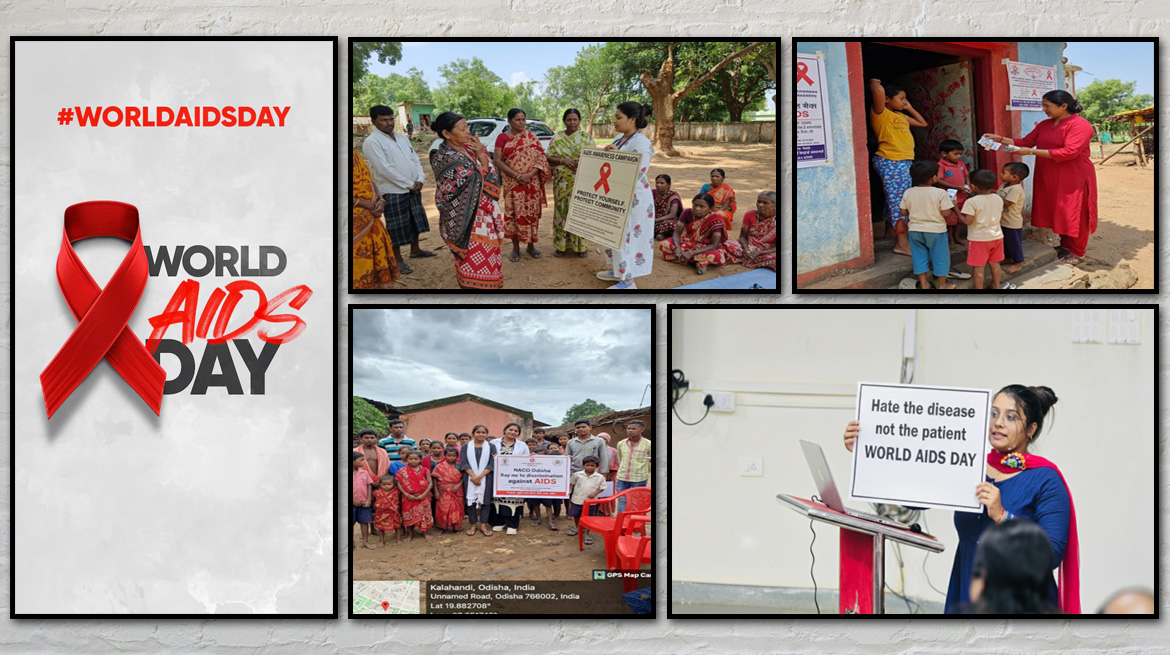
The districts of Western Odisha particularly the tribal and rural belts present a unique landscape. Myths thrive, misconceptions shape behaviour, and stigma remains a silent barrier to testing, treatment, and care. During field visits, I often remember my friend from Room No. 46. Her strength helps me speak with greater conviction when I sit with Young tribal women hesitant to get tested due to fear of community judgment & Migrants returning from brick kilns, vulnerable due to lack of continuous ART. Adolescents, misled by misinformation from peers and social media & Families, who still believe sharing food or utensils can spread HIV.
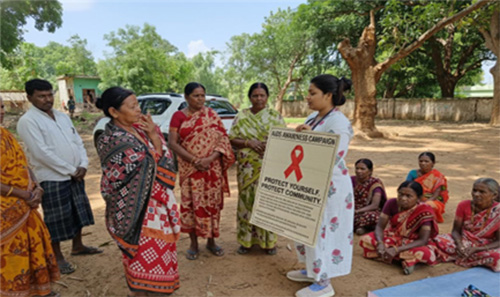
As a Community Medicine resident and NACO member I used practical, relatable, culturally sensitive approaches & believed in Conversations, Not Lectures. During community meetings, I begin with simple questions:
“Can we get HIV by touching?” “Can someone with HIV marry?”.
Within minutes, people become open to dialogue. I use charts and role-plays to dispel HIV transmission myths and promote supportive behaviours. Flexible ART timings, reminders, and home visits boost adherence. In tribal families, I stress that vaccines are “practice matches” for immunity. With appropriate CD4 levels, PLHIV should receive Hep B, pneumococcal, influenza and HPV vaccines, which greatly reduce infections.
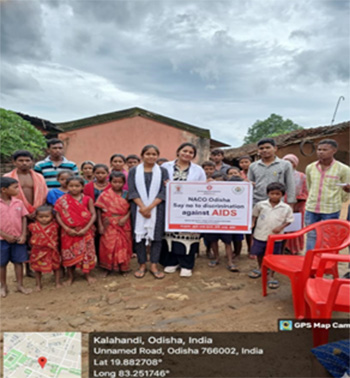
One of the most powerful lessons I have learned is that HIV care is not only biomedical but it is emotional, social, and familial. Families who support PLHIV create better adherence rates, lower depression levels, improved outlook towards life & reduced risky behaviours. I emphasise this heavily during my counselling sessions. When I say, “The best immunity booster is a supportive family,” people understand immediately. Many mothers start crying, fathers come forward, and siblings step closer to the person living with HIV. I have seen stigma break in real time ;those moments redefine why I chose this profession.
As final-year Community Medicine residents, we play a key role in strengthening HIV care beyond clinics. We can integrate HIV education into schools, Anganwadis and panchayats, promote early testing through village haat camps and couple testing, support migrants with interoperable ART refill systems, and reduce stigma by developing “local HIV champion” and sensitising community leaders.
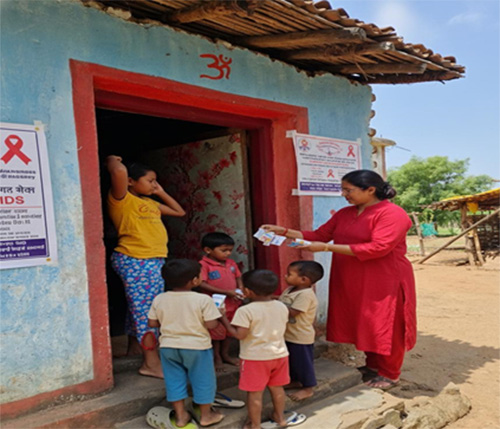
Improving ART accessibility must remain a priority through patient-friendly approaches like multi-month dispensing and telemedicine-based counselling for those unable to travel regularly to ART centres. [1, 2 ] Finally, protecting key populations including female sex workers, MSM, and transgender communities demands that we provide non-judgmental, confidential, and compassionate services that acknowledge their challenges; building trust, rather than policing behaviour, forms the foundation of effective and ethical HIV prevention and care.
A Full-Circle Moment : Every time I conduct a health education session or counsel a newly diagnosed patient, I silently thank the girl from Room No. 46. Her courage lit a spark that today shapes my work in the rural corners of Odisha. She taught me that HIV is not just a virus—it is a social condition, a psychological burden, and a mirror reflecting society’s attitudes. But it is also a reminder of human resilience.
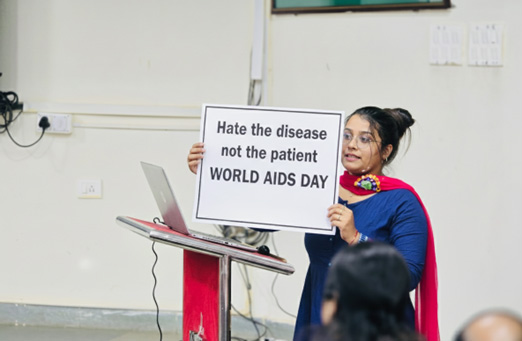
On this World AIDS Day, as I stand in a tribal village under the winter sun, speaking to families, students, and health workers, I carry her story with me. A story of strength, of dignity, of hope and of an unbroken determination to ensure no one feels alone in their battle against HIV.
This is not just my profession; this is my purpose.
References
- National AIDS Control Organisation (NACO). Training Manual for HIV Counselling and Testing Services. 2023.
- Guidelines on HIV Prevention, Testing, Treatment and Care. 2022.