
Rest during menstruation is not only acceptable — it is intelligent self-care.
Even the moon pauses between her waxing and waning — why must a woman not?
- The Rhythm We Forgot
In ancient India, menstruation was viewed as a sacred biological rhythm, not a social inconvenience. Texts described it as śarīra-śuddhi — a monthly purification process of body, mind, and spirit. Women were encouraged to rest, reflect, and renew, allowing the body to release what it no longer needed.
This practice was not merely cultural; it was grounded in physiology. During menstruation, energy in the body flows downward through apāna vāyu, supporting the elimination of the uterine lining. Resting helped maintain that natural direction of energy and internal balance.
The intent was never isolation but recuperation. Over time, however, this wisdom was misinterpreted. Modern life glorifies constant motion — deadlines, fitness goals, and social expectations — leaving little space for the body’s natural need for rest.
- The Pressure to “Keep Going”
In today’s culture, endurance is often mistaken for strength. Women are encouraged to “power through” cramps, fatigue, and mood changes — as though pausing were a sign of weakness. But the menstrual cycle is not linear; it moves in waves, much like the ocean or the moon’s orbit.
Scientifically, menstruation coincides with a drop in estrogen and progesterone, leading to fluctuations in neurotransmitters such as serotonin and dopamine. This explains the common symptoms of fatigue, irritability, and reduced motivation during this phase.
In fact, research supports what Ayurveda and traditional medicine emphasized centuries ago: rest reduces cortisol (the stress hormone), eases uterine contractions, improves sleep quality, and enhances emotional stability. Gentle activities like slow walking or stretching can help, but intense workouts or long journeys may worsen cramps and delay recovery.
Listening to your body during this time is not a sign of weakness — it is cooperation with your physiology.
- Rest Is Not Regression — It’s Recovery
The body performs intricate internal repair during menstruation. Uterine muscles contract to shed the lining, hormone levels recalibrate, and iron stores shift. Rest allows these processes to occur efficiently and with less strain.
The Rajaswala Paricharya, described in classical Ayurvedic texts, recommended avoiding physical exertion, late nights, sexual activity, and long journeys during menstruation. Far from being restrictive, these suggestions aimed to protect reproductive energy and preserve mental calm.
Modern research aligns with this ancient understanding. Adequate sleep and physical rest support autonomic nervous system balance, help regulate blood pressure, and stabilize mood. In simple terms, a few mindful days of rest today prevent long-term imbalance tomorrow.
The body does not need to be pushed; it deserves to be respected.
- The Eco-Health Connection
Menstrual health extends beyond the individual — it impacts the environment and public health as well.
Most commercial sanitary products contain plastics, bleaches, and artificial fragrances that can irritate the skin and release microplastics into water and soil. According to the WHO and Indian Council of Medical Research, millions of pads and tampons are discarded every year, creating waste that can take centuries to decompose.
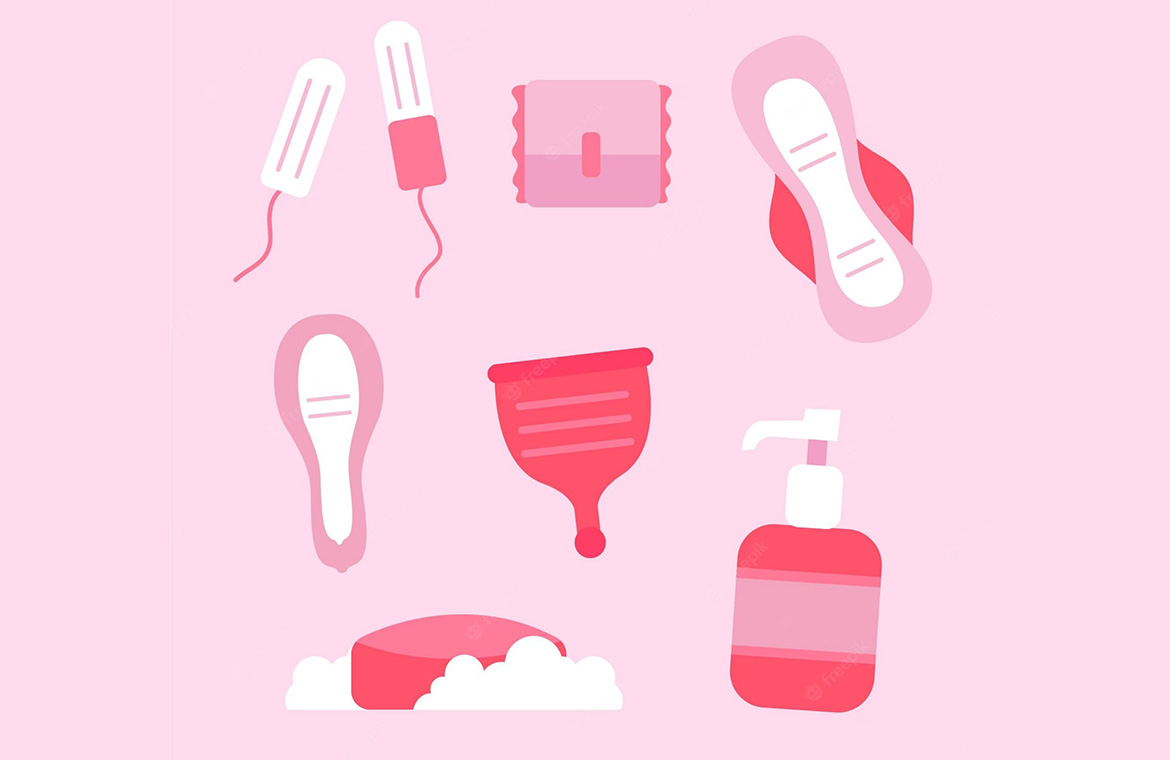
Fortunately, sustainable menstrual options such as cloth pads, menstrual cups, and organic cotton liners are becoming increasingly popular. They are cost-effective, safe, and environmentally friendly.
What Ayurveda once described as cleansing the body, public health today describes as sustainability for the planet. The essence is the same — harmony between the inner and outer worlds.
- Myths and Misunderstandings
Many myths around menstruation arise from misinterpretation, not truth. The ancient view never considered menstruating women “impure.” Rather, they were regarded as energetically heightened — more sensitive, intuitive, and inward-focused due to physiological changes.
Interestingly, modern neuroscience supports this perspective. Hormonal fluctuations during menstruation can increase sensory sensitivity and emotional depth. This heightened awareness explains why rest and solitude often feel appropriate during this phase.
The real impurity lies not in the process of menstruation, but in the mindset that stigmatizes it. Medically speaking, menstruation is a vital sign — an indicator of reproductive and endocrine health, just as pulse or temperature reflects systemic function.
- Let the Water Wait
When someone asks, “Why rest? Why not swim or exercise as usual?” the answer is simple: because the body is following its natural rhythm.
Let the water wait. Let the world wait. Even the earth rests before the monsoon; even the moon wanes before she waxes again.
Menstruation is not a disruption — it is renewal. Allowing that space supports hormonal balance, emotional steadiness, and long-term reproductive health.
Conclusion: Rest Without Guilt
To rest is not indulgence.
To slow down is not weakness.
To honor your biological rhythm is not superstition — it is science informed by wisdom.
Both Ayurveda and modern medicine agree: respecting the menstrual rhythm promotes overall well-being. When you allow your body to rest, you protect not only your reproductive health but also your mental resilience and long-term vitality.
So take that pause. Skip the gym if you need to. Eat nourishing foods, stay hydrated, and give your body permission to renew — exactly as nature intended.
Because true strength sometimes lies not in doing more, but in knowing when to rest.
References
- World Health Organization. Menstrual health and hygiene: A call for action for equality, well-being, and rights. Geneva: WHO; 2022.
- Indian Council of Medical Research. National Guidelines on Menstrual Hygiene Management. New Delhi: Ministry of Health and Family Welfare; 2021.
- American College of Obstetricians and Gynecologists. Menstruation in girls and adolescents: Using the menstrual cycle as a vital sign. Obstet Gynecol. 2015;126(6):e143–e146.
- Gehlawat M. Menstruation: Debunking Today’s Myths with Ancient Indian Sciences. YMER. 2023;22(2):273–275.
- Sharma P, Dwivedi S. Revisiting Rajaswala Paricharya: An Ayurvedic Perspective on Menstrual Health and Rest Practices. J Ayurveda Integr Med. 2021;12(3):458–464.