How pop culture pandemics shape our real-world health perceptions
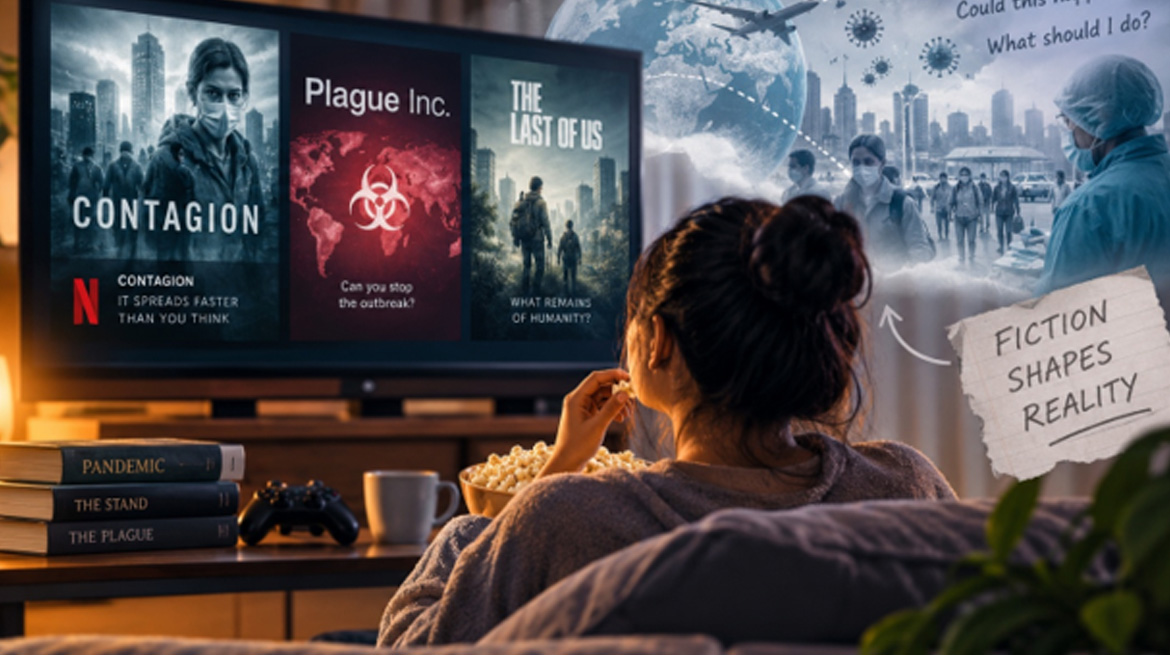
The lights dim, the popcorn crackles, and a new outbreak appears on screen. Or you’re playing a game where you race to contain a global pandemic. Or a book pulls you into a mysterious disease spreading across continents. From Contagion to Plague Inc. to The Last of Us, pop culture has always been fascinated by pandemics. As public health practitioners, it’s worth asking: how do these fictional outbreaks shape our real anxieties, beliefs, and behaviours during actual health emergencies?
Entertainment is easy to dismiss as pure escape. But stories carry weight — they mirror our fears, reinforce our assumptions, and sometimes quietly become our main source of information. This blurring became obvious during COVID-19, when many people made sense of an unprecedented global event by reaching for movie plots and pandemic simulations they already knew.
What Pop Culture Gets Right
Fictional pandemics simplify complex epidemiology into something we can feel — and sometimes that’s exactly their strength.
- They show interconnectedness. Films like Contagion capture how a single cough can trigger a global emergency, making visible a hard-to-grasp truth: modern travel and trade can turn a local outbreak into a worldwide one.
- They spotlight the unsung heroes. Characters like Kate Winslet’s epidemiologist in Contagion pull back the curtain on the unglamorous, essential work of contact tracing and outbreak investigation — work that rarely gets attention otherwise.
- They rehearse behaviour change. Mask-wearing, distancing, lockdowns — fictional outbreaks quietly prepare audiences for the individual and collective responsibility a real crisis demands.
- They celebrate science and cooperation. Many stories end with international collaboration and scientific ingenuity winning out over disease — a hopeful, if simplified, message.
Where the Story Goes Wrong
Drama, not accuracy, drives fiction — and that has real costs.
- Exaggerated lethality. Fictional pathogens often spread faster and kill more certainly than real emerging diseases ever do, breeding disproportionate fear.
- The “Patient Zero” obsession. Sensationalising a single point of origin can fuel stigma and xenophobia, distracting from what actually controls outbreaks.
- The lone-hero fallacy. A brilliant scientist finding a last-minute cure oversimplifies how slow, incremental, and collaborative real research is.
- Conspiracy tropes. Corrupt governments and cover-ups are a common plot device — and they can seed genuine distrust in public health institutions when a real crisis hits.
- Misrepresented transmission. Viruses that mutate implausibly fast or spread through unlikely routes can leave audiences confused about which precautions actually work.
What Public Health Can Do With This
Rather than dismissing pop culture pandemics, public health can engage with them strategically.
- Build media literacy. Teach audiences to separate cinematic drama from epidemiological reality.
- Consult on the creative process. Public health experts could work with writers, game designers, and filmmakers early — much like technical advisors already do for other industries — so stories stay both accurate and compelling.
- Tell our own stories. Games, comics, and short films grounded in real science can be just as gripping as fiction, while modelling community responsibility and real-life heroism.
- Meet fans where they are. Existing fandoms are ready-made audiences; collaborating with creators or communities can carry accurate information further than a campaign ever could alone.
- Lead with resilience, not just fear. Where drama needs conflict, public health communication can spotlight recovery, innovation, and solidarity — informing without leaving people paralysed.
The Unseen Influence
Pop culture pandemics are more than entertainment — they function as a kind of unofficial education, quietly shaping what we believe about illness, risk, and the future. As health crises grow more complex, understanding this influence on public trust and behaviour becomes part of the job.
By promoting media literacy, engaging with creators, and telling sharper stories of our own, public health can turn the fictional fear of “Patient Zero” into a genuine understanding of shared responsibility and scientific progress. The pandemic on screen may be fictional — but its echo in how we respond to the next real one is not.