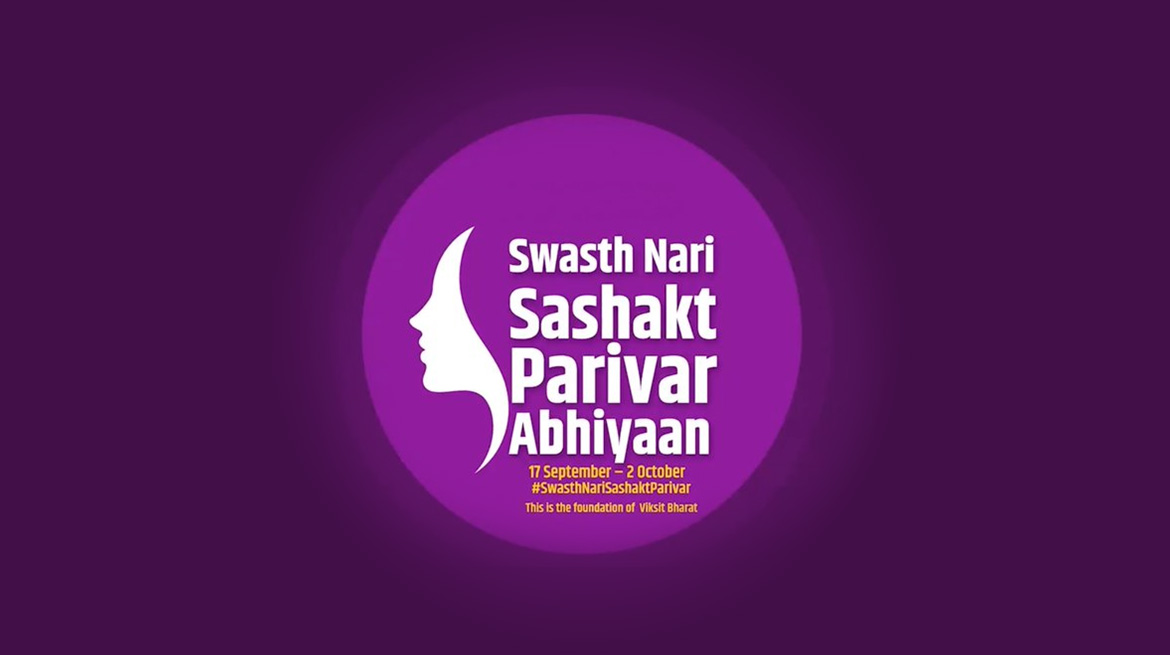
Women’s health and family welfare have always been a crucial issue in a vast and diverse country like India. The government’s recently launched ‘Swasth Nari, Sashakt Parivar Abhiyaan’ is a much-needed step in this direction. This initiative is highly relevant not only for protecting women’s health but also for the well-being of the entire society and future generations.
This initiative is the need of the hour as women’s health challenges remain deeply rooted in our country. Problems like maternal mortality rate (MMR), infant mortality rate (IMR), and low hemoglobin (anemia) remain a serious public health concern. Therefore, this program focuses on providing health and nutritional security to women at every stage of their life cycle (Life Cycle Approach).
Are we ignoring women’s health?
Women play a crucial role in the progress of any family, society, or nation. If a woman is healthy, the entire family remains healthy and safe. A mother’s health is directly linked to the health of her newborn. This same newborn will, in the future, surpass adolescence and become an adult, giving birth to a new generation and this is how the life cycle continues. The mother, or woman, is the pivot of this life cycle. Hence initiatives like ‘Swasth Nari, Sashakt Parivar Abhiyaan’ can be considered the foundation of social and national development.
Even today, the situation of maternal and infant mortality in India remains alarming. Quality antenatal, perinatal, and postnatal care is essential to reduce maternal mortality and ensure infant survival. Similarly, anemia among women and adolescent girls is a major challenge, affecting performance, education, and overall quality of life.
Need-Based Initiative
The government has timely implemented the ‘Swasth Nari, Sashakt Parivar Abhiyaan’. It is not just a health campaign, but integrates all aspects of women’s health with a comprehensive approach.
Life Cycle Approach
This initiative focuses on health throughout a woman’s life cycle i.e. pre-conception, antenatal, intranatal and post-natal. Essential nutrition, health services, and counseling at every stage, from adolescent girls to older women.
Anemia Control
The Government of India already runs effective programs like “Anemia Mukt Bharat.” This new initiative will further strengthen it, improving hemoglobin levels in adolescent girls and women, reducing pregnancy complications, and ensuring healthy births.
Reduction in maternal and infant mortality
This initiative focuses on health camps across country by medical colleges, district-level hospitals, etc. to address maternal and infant mortality on a large scale, and its primary objective is to provide timely health services, safe delivery, and preventive and curative medical care.
Positive impact on family and society
When women are healthy, the family’s productivity and the education and nutrition of children will automatically improve. This will lead to long-term positive changes in society. The health of today’s working women directly impacts the country’s economy, and a healthy woman is the foundation of a healthy society.
A step towards the Sustainable Development Goals (SDGs)
India has committed to achieving the Sustainable Development Goals (SDGs) set by the United Nations by 2030. The Swasth Nari, Sashakt Parivar Abhiyaan’ will prove to be a milestone in achieving these goals.
SDG 3 (Good Health and Well-Being): Reducing maternal mortality to below 70 and infant mortality are key components of this goal. The new initiative will directly contribute to achieving this goal.
SDG 2 (Hunger Elimination and Nutrition Security): Controlling anemia and improving women’s nutrition will strengthen this goal.
SDG 5 (Gender Equality): This campaign, focused on women’s health, will promote gender equality by empowering women.
Thus, this initiative is not only related to health but also directly linked to social, economic, and educational development.
The Importance of a Life-Cycle Approach in Women’s Health
The life-cycle approach means that a woman’s health should not be limited to pregnancy or childbirth, but rather, attention should be paid to her health throughout her life.
Adolescence: Nutrition, menstrual health, and anemia prevention.
Reproductive age: Family planning, safe motherhood, and mental health.
Pregnancy: Prenatal care, safe delivery, and postpartum care.
Middle and old age: Bone health, cancer screening, and mental health.
If health is protected at every stage, women will remain healthy throughout their lives, and their families, society, and the country will also remain strong and secure.
This initiative will bring awareness about health in society. Women will be recognized not only as “caregivers” but also as “care recipients.” At the policy level, this initiative will further strengthen India’s health system and increase women’s access to primary health services.
Therefore, it is quite appropriate to say that “a healthy woman is the foundation of a strong family and a prosperous India.”