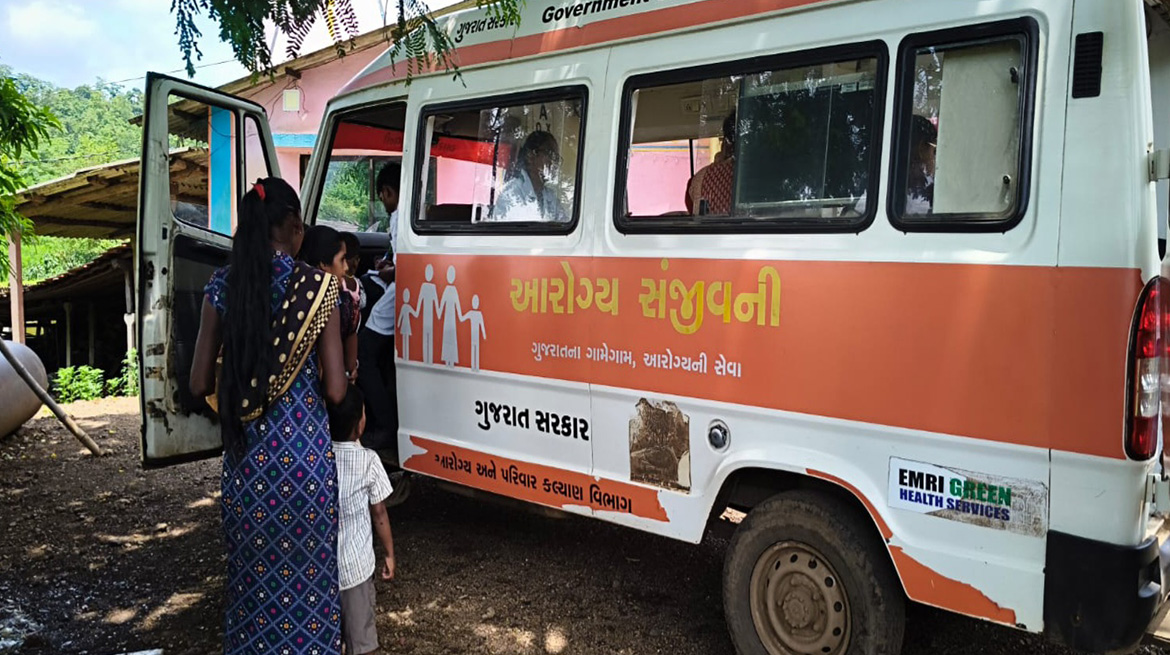
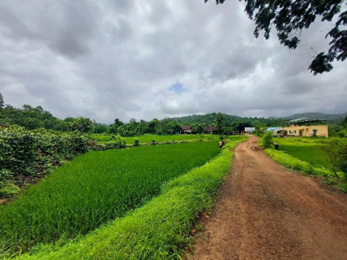
Hills covered with dense trees, lush green paddy farms, few kutchcha and some pucca houses scattered among the natural landscape. Peaceful silence calms the mind. And… there is a siren echoing from distance, rising in volume as the vehicle comes nearer. As if woken from slumber with this sound, the villagers start gathering at the small clearing near the village temple. Some have come from the farms they are working on, and some have come from their homes after listening to the familiar sound of Mobile Medical Unit’s (MMU) van.
 As the van come to halt at its designated place, the patients line up. The small crowd keeps growing in number steadily as the MMU van’s medical officer continues to attend all one by one. There are all variety of ailments you can see there- child with cough and runny nose, pregnant mother coming to get her routine antenatal care, diabetes and hypertension patients for their blood glucose and blood pressure getting measured, someone with backache, someone with skin lesions etc. There is a laboratory technician with basic equipment for blood tests, pharmacist dispensing necessary drugs and a driver also helping by entering patients’ information in register and distributing case paper to each.
It seems like a flawless machinery working efficiently after years of practise of working together in this mobile medical unit. Within almost half an hour all the patients are taken care of, some are treated, and few are referred to the nearest hospital as per requirement, and they all disperse, walking back to their farms or home with tablets or syrups in their hands and smiles on their faces.
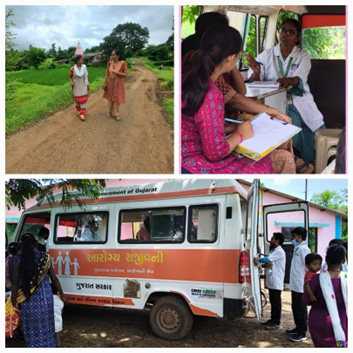 The MMU van starts again, to go to the faliya of the same village located on the other side of the hill, again with its siren singing its arrival to the other side. They try their best to serve people as close to their homes as possible. This village is located in remote tribal area, connected by a narrow road with the PHC located few kilometres away. This “few” kilometres’ distance turns into heavy ordeal considering the hilly terrain and almost non-existent public transport system. Villagers must walk long every time they need to go to the PHC for seeking healthcare. The MMU has come as a boon for them as the minor ailments get treated at their doorstep, without them taking break from their labour work and spare an entire day to walk to and from the PHC.
The MMU staff has also poured their hearts into the services they provide, e.g. in the initial phase of this MMU service, they took round of entire village with the siren singing to make the villagers familiar with the sound of MMU van’s arrival. They explored and finalized places which could be accessed by maximum villagers with ease. As per their rotatory schedule, this van comes once a week in this village for fixed duration. The timing and day of arrival were displayed prominently in the village to make everyone aware about this service. After years of their efforts, now the MMU has established good rapport with the villagers and the existing health staff i.e. ASHA. ASHA was coordinating happily with the villagers and the MMU staff to ensure all get the timely intervention and also supported those needing referral.
MMU is a well-established service under National Health Mission, for the remote, underserved, vulnerable tribal, rural and sometimes urban population. MMU provides primary health care services under 12 thematic areas that include maternal and child health, adolescent health, reproductive health, communicable and non-communicable diseases, mental health, geriatric care, emergency care etc. Population norm defines there should be one MMU per 10 lac population and 5 MMU per district but the norms are relaxed for the hard-to-reach hilly areas. MMU is provided with essential drugs and basic laboratory services such as haemoglobin test, urine pregnancy test, blood glucose test, urine albumin sugar test etc. The review of activities of MMU is done at state level through the reporting the staff does in the MMU app including drug, logistics and patient related data entry.
The MMU operationality comes with its own challenges too e.g. this particular MMU that we visited had vacant post of nursing staff for the last one year since the posted nursing staff was transferred. This van was involved in an accident and after the repairing was done, the mechanism to hang curtains at physical examination area to ensure patient privacy was not yet repaired. This hampered examination of pregnant women during antenatal care. Timely addressing such issues could lead to more effective service delivery to the community in need.
In nutshell, MMU continues to provide health services to the underserved areas consistently, overcoming the challenges and it is a concept worth sustaining with support from the health system. It was indeed a wonderful experience assessing the MMU in tribal regions which made us aware of how some heroes in white cape continue their silent struggle of providing best possible primary level health care to the ones in need.
Reference:
- Operational Guidelines for Mobile Medical Unit. Ministry of Health and Family Welfare. Government of India. 2015. Available from URL: https://nhm.gov.in/images/pdf/NHM/NHM-Guidelines/Mobile_Medical_Units.pdf
Image courtesy: Images were captured by the author herself and Dr Hinal Chudasama (Senior Resident, Community Medicine Dept., GMERS Medical College, Valsad)