
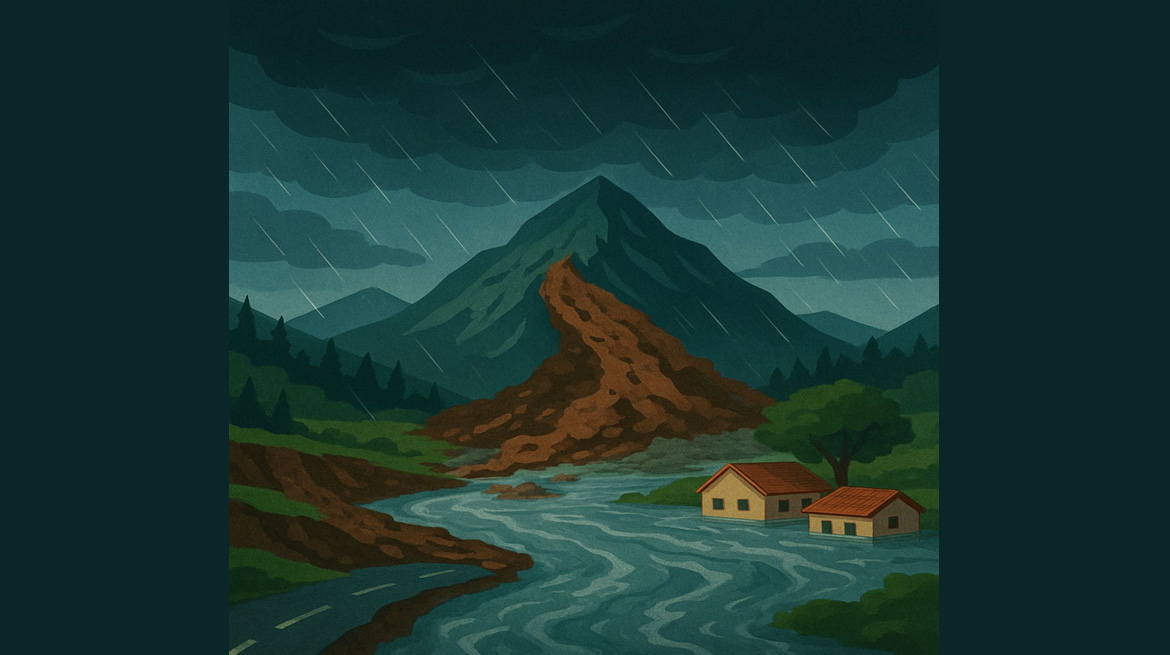
Lately, every morning greets us with unsettling image of floods sweeping through valleys, roads collapsing, and houses sinking into the fragile slopes of the Himalayas. These are not just random clips on our screens but fragments of a much larger tragedy unfolding before our eyes. The Himalayas are crying, and they are calling us to save them.
Is This Nature’s Wrath or Our Doing?
This raises difficult questions. Why is this destruction not stopping? Is continuous rainfall a mere act of nature, or is it worsened by human actions? While some may call it the “wrath of God,” the truth is that human activities have magnified the disaster.
Mountains once stood tall in their natural balance. But in the name of development, we have cut forests, widened roads, and built hotels on fragile slopes. Nature, in response, is reclaiming its original state with floods, landslides, and destruction as painful reminders of our excesses.
The Price of Blind Development
Tourism is booming, yes. People are earning. But at what cost? How many lives have been lost to floods? How many homes destroyed? On highways, vehicles are stranded for hours, travelers sharing their frustration yet few pause to notice the deeper pain: the pain of the mountains themselves.
The Himalayas have always been a symbol of strength. But today, they look fragile, vulnerable, almost pleading. We often call these floods and landslides “natural disasters.” But deep inside, we know nature alone is not to blame.
- We built roads where forests once stood.
- We dug tunnels, dams, and resorts into the fragile slopes.
- We ignored warnings about climate change until the melting glaciers began speaking louder than our silence.
Yes, the rains are heavier. Yes, the mountains are geologically young. But the scale of today’s destruction is also a mirror reflecting our choices, our neglect, our hurry for “development” at any cost.
An old man on the way to Kedarnath told me:
“The way things are going, only Kedarnath temple will remain everything else will be swept away.”
His words feel hauntingly true today unchecked crowds, overconstruction, and exploitation are pushing the Himalayas to their breaking point.
These are not just environmental issues but public health concerns. Disasters bring epidemics, loss of livelihood, food insecurity, and long-term displacement.
Can We Still Save the Himalayas?
Yes, but only if we act now. Some urgent steps include:
- Sustainable tourism policies that limit overcrowding
- Eco-friendly infrastructure planning rather than unchecked construction
- Afforestation drives and community-led conservation programs
- Disaster preparedness and early warning systems in vulnerable zones
- Climate adaptation strategies focusing on local resilience
We need to listen not only to scientists and policymakers but also to the wisdom of local communities who have lived in harmony with these mountains for centuries.
A Call to Listen
When we say “the mountains are crying,” it is not mere poetry. It is a reminder that ecosystems speak in floods, in landslides, in the collapse of livelihoods. If we fail to listen, the cries will only grow louder, and the toll on human life will deepen.
The Cry We Cannot Ignore
Unless we change our path, the Himalayas will continue to remind us with floods, with landslides, and with loss. The choice is ours: will we listen to their cry, or wait until silence is all that remains?
I often remind myself — the Himalayas are not distant peaks. They are the water source for millions of Indians. If they fall sick, we fall sick. If they weep, we drown.
The question is: will we listen to the cries before it’s too late?