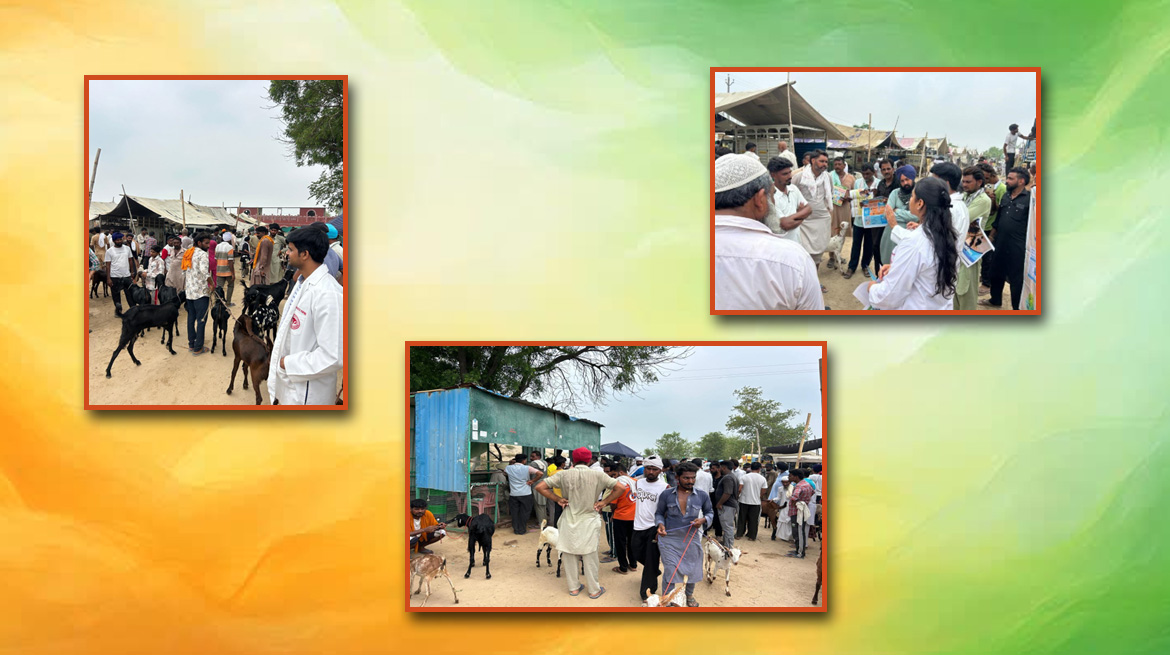
Tungwali, a quiet village resting gently in the heart of Bathinda, Punjab, has a rhythm that doesn’t shout but hums. This connection between people and animals is intensely emotional and goes beyond mere practicality. It is deeply rooted in early morning customs, the fields where they work side by side, and the silent times of mutual care and effort.
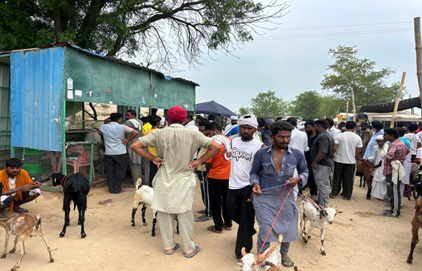
A special kind of energy greeted Tungwali on the morning of the Pashu Mela. It wasn’t chaos it was celebration. The dusty roads turned into lively corridors as farmers, animals, families, and traders all came together in a colourful, textured gathering. Farmers from different rural areas proudly claimed it to be the largest animal fair in the state.
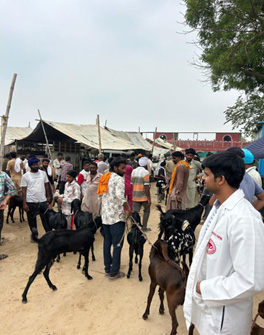
The deeper we walked into the mela, the more the sights and sounds wrapped around us like an old story coming to life. An elderly man, his turban slightly tilted, murmured a folk song to a tense mare, as if he were soothing her with recollections. A boy of about sixteen years old proudly showed his bull, giving the impression that he was a medal-winning athlete.
What moved us most wasn’t the size of the fair or the number of animals. It was the unspoken love in the air, the kind that exists between beings who rely on each other without needing words. Amid the calls of vendors and the low grunts of livestock, there was trust. People weren’t just examining animals for purchase; they were connecting. The transactions weren’t just economic they also were emotional. For many, these animals weren’t just farm help. They were livelihood, legacy, and lifeline all rolled into one.
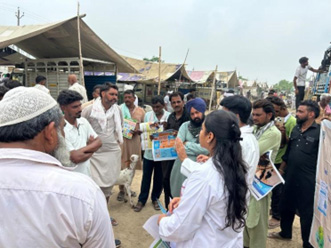
Our AIIMS Bathinda team arrived with humility, bearing more purpose than trinkets. We were there to raise awareness about zoonotic diseases, those silent infections that travel from animals to humans, often unnoticed.
Under a shaded patch near the main road, we quietly set up our stall. Our banner fluttered in the warm breeze: “Zoonotic Diseases: Awareness Saves Lives.” The simple message drew people in. We hadn’t come to preach; we came to listen, converse, and share.
A woman in a radiant phulkari shawl approached, holding her son’s hand. He looked curious; she looked worried. She said he had been bitten by their pet dog, Oscar, two days ago. Her voice was quiet, uncertain. We explained gently about rabies, how urgent care could prevent tragedy, and how awareness is the first step toward protection. She nodded slowly, fear in her eyes giving way to understanding.
Nearby, a tall dairy farmer leaned in as we spoke about brucellosis, a disease he had never heard of, though he often helped his cattle during birthing. As we described its effects, flu-like symptoms in humans and miscarriages in livestock, his expression shifted from curiosity to concern. He took extra leaflets, promising to share them in his village. In that moment, it wasn’t just information we shared; we were planting seeds of awareness, seeds that could grow into safety for entire communities.
Around us, the fair thrummed like a village melody. Majestic Murrah buffaloes stood calmly, their dark coats gleaming. Beetal and Barbari goats hopped about, bells jingling with each step. Proud horses showed off high steps, their braided manes swaying. Birds joined in, roosters crowed, parrots chattered, mynas sang, and pigeons fluttered overhead, splashes of colour and sound weaving into the day.
But what made this gathering magical was not just the variety of species or the number of people; it was the quiet thread running through it all, the relationship. These animals weren’t just possessions; they were part of the extended family.
In between conversations, we took a moment to feel the breeze, to pause and simply observe. Nearby, young girls giggled as they named their newly bought goats, while a camel strolled past us unhurriedly. The fair was about more than just buying and selling; at its heart, it was a celebration of rural life in its truest form.
In those moments, we talked about the idea of One Health the simple but powerful truth that the health of people, animals, and the environment are all closely linked. We shared how illnesses don’t follow borders, and how looking after animal health also means looking after our own. We introduced them to NIVARAN, our helpline for zoonotic disease awareness, and it was heartening to see people taking it seriously writing it down carefully or saving the number in their phones, knowing it could help protect their families and communities. Some even invited us to visit their own villages. That’s when we knew: the message had not just been heard it had found a home.
As the day wore down, the fair began to quiet. Health doesn’t always wear a white coat or begin with a prescription. Sometimes, it starts in muddy boots, among haystacks and open skies, where farmers rise with the sun and care for their animals like family. It lives in the quiet understanding between them, in the routines they follow, and in the wisdom passed through simple, heartfelt conversations. Out here, animals aren’t just part of the work; they’re part of the story.
Our visit to the Tungwali Pashu Mela wasn’t just another outreach event it felt like stepping into the soul of rural North West India. Change doesn’t always come through big revolutions sometimes, it begins with a question, a leaflet, or a shared story. We came with information. We left with stories. And somewhere in between with hooves echoing in the dust and conversations flowing through the fairgrounds a quiet, beautiful change had begun.
“A fair may last a day, but the seeds of awareness it sows can grow for generations”.