“Yes! we can end TB: Led by countries, powered by people”
Public participation is an important aspect of any national program for any disease elimination/eradication.
Public participation activities were strengthened through community and institutional partnerships in past years.
NTEP (National Tuberculosis Elimination Program) offers complimentary screening, diagnosis, and treatment for all TB (Tuberculosis) patients at public health centers and specific private health centers. TB services have been moved down to the Ayushman Arogya Mandir (AAM) level.
Community engagement is guaranteed through the extensive primary health care services offered by AAM. Extensive information, education, and communication (IEC) initiatives are carried out to inform and enhance public understanding of TB symptoms, prevention methods, and the significance of prompt treatment
Public participation activities are implemented with the participation of schools, Panchayati Raj Institutions, self-help groups, Anganwadis, local NGOs, and civil society organizations.
Only time will tell what results the alliance of AAM and NTEP will yield, but right now it is important to spread information among the general public about how help against TB will reach the last person through AAM.
Ayushman Arogya Mandir aims to transition from a selective health care model to one that offers a comprehensive array of services, including preventive, promotive, curative, rehabilitative, and palliative care.
It consists of two interrelated components.
The first component will establish 1,50,000 Ayushman Arogya Mandirs to provide Universal Primary Health Care, which is free for users and emphasizes wellness while offering a broader array of services within the community.
The second component, the Pradhan Mantri Jan Arogya Yojana (PM-JAY), provides health insurance coverage of Rs. 5 lakhs per year for more than 10 crore economically disadvantaged and vulnerable families to access secondary and tertiary care.
Beyond maternity and child health care, Ayushman Arogya Mandirs are expected to provide a wider range of services, such as treatment for non-communicable diseases, palliative and rehabilitative care, oral, eye, and ENT care, mental health, TB screening and treatment services and first-level care for emergencies and trauma, including free necessary medications and diagnostic services.
In order to lower TB incidence and death, program interventions were redesigned to target susceptible populations based on the results of the Tuberculosis prevalence study.
Under the program, the following actions and interventions have been implemented:
Targeted interventions using district-specific and state-specific strategic plans in high-TB burden areas.
Giving TB patients free medications and tests.
Programs to actively locate TB cases in important vulnerable and co-morbid populations.
Utilisation of Ayushman Arogya Mandir with TB screening and treatment
services.
Involvement of the private sector with incentives for TB case management and notification.
Expansion of molecular diagnostic facilities to subdistrict levels.
Expansion of the Ni-kshay Poshan Yojana’s nutritional support coverage for TB patients.
Increased information, education, and communication (IEC) efforts to improve health-seeking behavior, raise community knowledge, and lessen stigma.
Combine line ministries’ resources and efforts to eradicate tuberculosis.
TB preventive treatment is given to susceptible populations and contacts of TB patients.
Track TB cases that have been notified via the Ni-kshay portal.
Under the Ni-kshya Mitra project, give TB patients and family contacts additional nutritional, diagnostic, and career support.
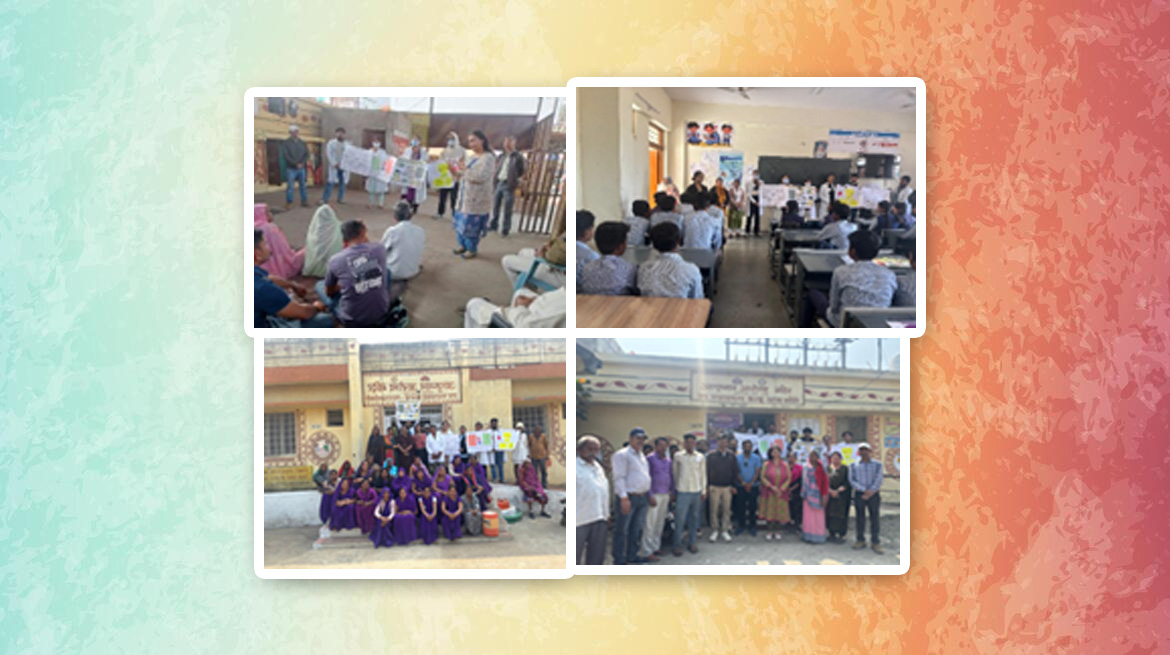
We are consistently carrying out these NTEP schemes to a considerable extent within the framework of government rules and policies, under an NMC-approved structure, along with interns & social workers’ team of Community Medicine department of RHTC Bhouri, Chirayu Medical College, Bhopal with the support of PRI leaders, Community Health Officers, Anganwadi workers, and ASHAs from time to time.
One day, an interesting incident occurred. Along with our team, we went to an Ayushman Aarogya Mandir in the area to conduct a TB awareness meeting on the weekly immunization day.
Unfortunately, no beneficiaries were present that day.
Then we noticed a crowd at a nearby Public Distribution System Cooperative. Everyone was in a hurry, but upon our request, the crowd at the cooperative agreed to listen to the TB awareness message.
They listened to the message patiently and understood it as well, thus showing public participation.
In the same way, making the most of every opportunity, we also conducted TB awareness sessions among higher secondary school students, in which both students and teachers showed considerable interest.
Here, under WHO’s messenger policy, we selected school children as messengers for the society.
Now what needs to be seen is this: out of all the people among whom we are spreading awareness about TB, how many will be able to take the right actions toward preventing TB when the time comes.
When the NTEP becomes community driven, ending TB is not just aspirational-it is achievable.