Last year, my neighbour, Sunita aunty, decided she wanted to “get fit.”
She did not buy dumbbells. She did not join a gym.
She bought herself a pair of new walking shoes.
Every morning, she walked religiously. And every evening, she complained:
“My knees hurt.”
“I feel tired all the time.”
“I’m gaining weight even though I walk!”
When someone suggested strength training, her reaction was immediate.
“Arre no, no. That’s for young girls and gym people.”
This reaction is more common than we like to admit.
Why women fear strength training?
For many women, strength training sounds dramatic, heavy weights, mirrors, loud music, and men grunting in the background. Understandably intimidating.
But strength training is simply making your muscles work against resistance. And resistance doesn’t have to come from a fancy machine.
It can come from:
Your own body weight
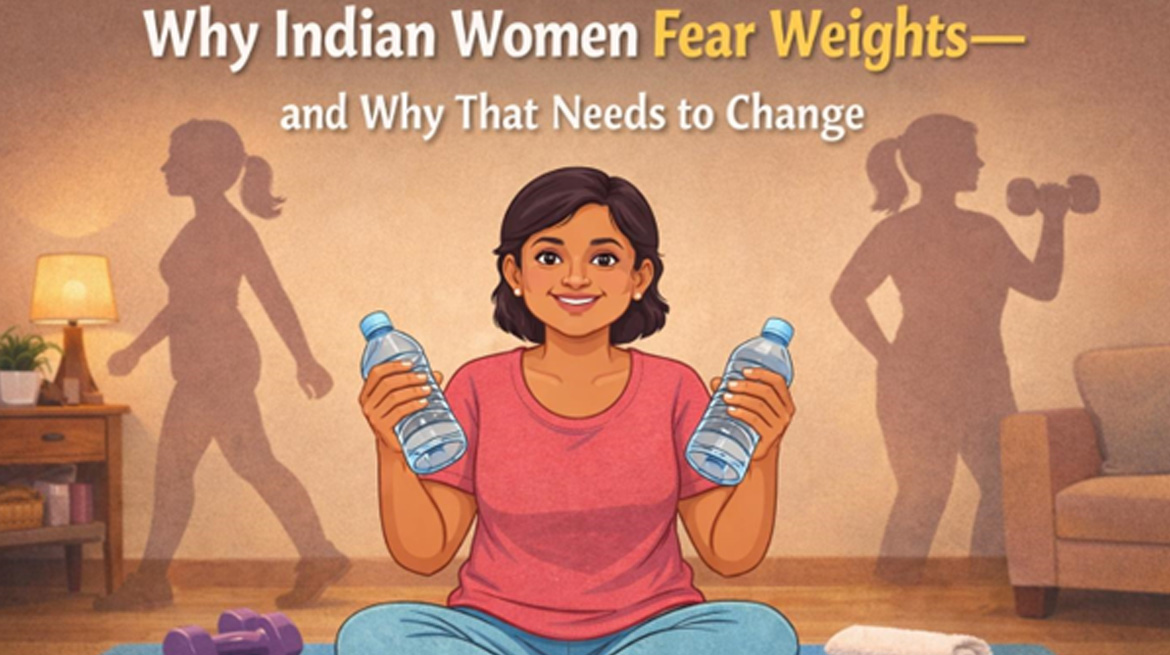
A water bottle
A bucket of clothes
A sturdy chair
Even gravity (which, unfortunately, never takes a day off)
Yet, women avoid it, choosing endless walking instead, because we’ve been taught that strength equals bulk, injury, or “not feminine.”
What happens when we only walk?
Walking is excellent. But walking alone doesn’t build muscle or protect bones.
Muscle loss starts quietly in women after their late 20s. By the time women reach their 40s and 50s, especially around peri- and post- menopause, declining oestrogen speeds up muscle and bone loss.
This is when complaints start appearing:
“My back hurts for no reason.”
“My balance isn’t great.”
“I feel weaker than before.”
“Weight gain has become stubborn.”
Menopause doesn’t cause these problems overnight. It simply reveals years of ignoring muscle health.
Sunita Aunty’s Plot twist
One day, Sunita aunty slipped slightly in the bathroom. She didn’t fall but it scared her.
Her doctor didn’t prescribe more walking.
He suggested something radical: “Strength exercises. At home.”
She laughed, but she tried.
- Sitting and standing from a chair (squats, in disguise)
- Holding the kitchen slab and doing wall push-ups
- Lifting water bottles while watching TV
- Standing on one leg while brushing her teeth
No gym. No leggings. No intimidation.
Three months later, the complaints reduced. Knees felt better. Confidence improved and yes, the weight gain slowed down.
Her verdict?
“I thought I was too old for this. Turns out, I was just late, not incapable.”
Why strength training is a lifelong need for women
Strength training does different things at different stages of life:
- In younger women, it builds strong bones and metabolism
- In midlife, it preserves muscle and prevents fat gain
- During peri- and post- menopause, it slows bone loss, improves balance, and protects independence
And the best part? It works even when started late.
Muscles respond at any age, they just need a reason.
But what about the myths?
Let’s address them quickly.
“I’ll become bulky.”
Unlikely. Women don’t have the hormones for it. What you gain is firmness and strength.
“I’ll hurt myself.”
Proper form and slow progression reduce injury risk, often more than fast-paced cardio.
“I need equipment.”
You really don’t. Your body weight is more than enough to begin.
The unexpected benefit: Mental strength
Something interesting happens when women start strength training, especially at home.
They stop seeing exercise as punishment.
They stop chasing calorie burn.
They start feeling capable.
There is confidence in being able to lift yourself up, literally and emotionally.
And the impact of this is even more pronounced during life changes like menopause, during which women feel that their body is letting them down. But with strength training, women are reminded of something entirely different – their body still shows up for them.
What’s next then?
Strength training is so important that it shouldn’t feel exclusive. Girls should be taught about building strength early, not after the problems start. Doctors and healthcare providers need to speak about muscle and bone health during routine visits, not only after fractures or diagnoses appear. Initiatives by locals through community spaces and affordable programmes, especially for working women and women who may feel intimidated by gyms, because women don’t need six-pack abs. They need strong bones, steady balance, and the confidence to age without fear.
Conclusion
Strength training does not require a gym membership. It requires nothing but a change in mindset. And maybe the real strength lies in realising that the tools women need have been around them all along in their homes, routines and resilience.
Sunita aunty agrees.
She still walks every morning, but now, she also lifts her water bottles proudly.